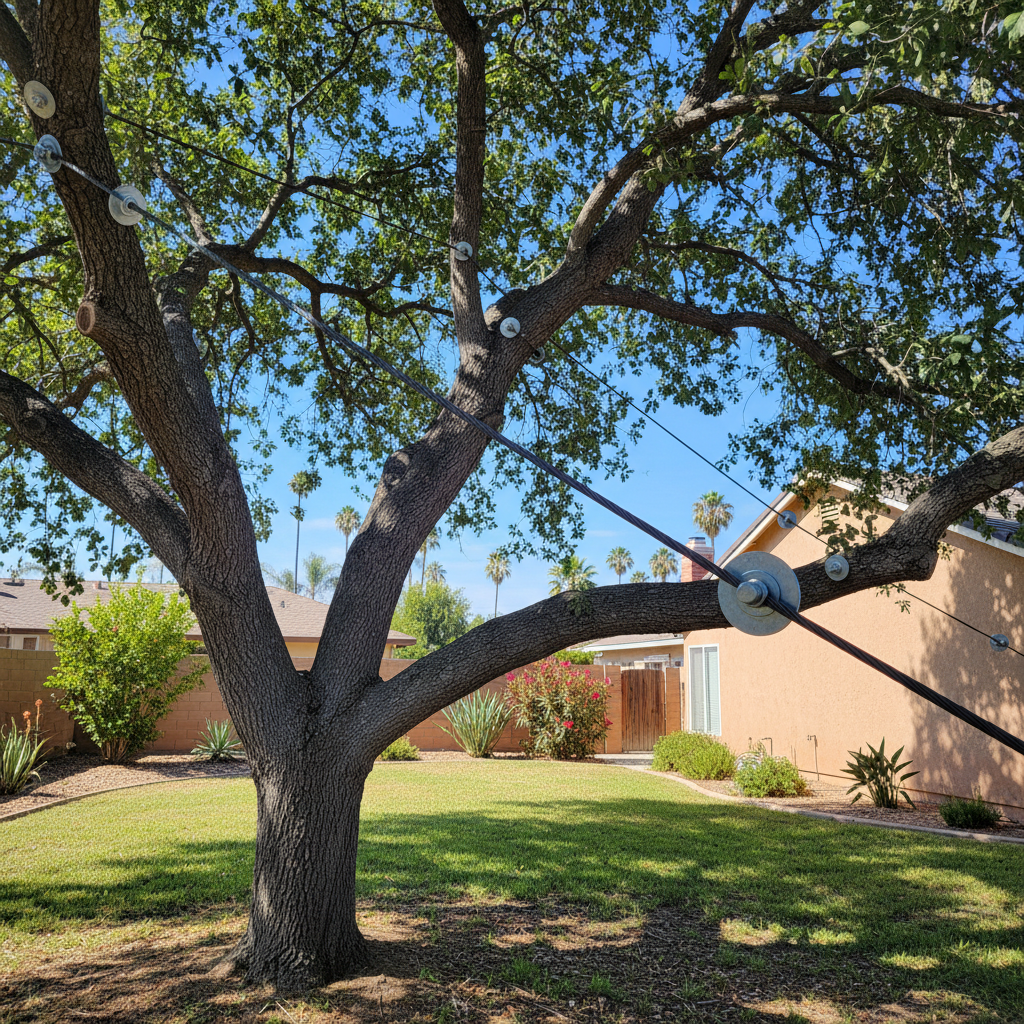
You've done the smart thing and had your weak-limbed or split-trunk trees cabled or braced. That's a big step in keeping them safe and healthy, especially with our occasional Santa Ana winds whipping through National City. But here's the deal: it's not a 'set it and forget it' kind of solution. Think of it like getting braces for your teeth – you still need to go for check-ups and keep them clean. The same goes for your tree's support system.
Extending the Life of Your Tree's Support System
The main goal of cabling and bracing is to provide supplemental support, not to fix a tree permanently. It buys the tree time to strengthen or helps it through a weak spot. To get the most out of it, you've got to be proactive.
- Regular Pruning: This is huge. If the tree keeps growing and putting on weight, those cables are going to be under more and more stress. Strategic pruning, especially thinning out the canopy, reduces the wind load and overall stress on the supported limbs. We're talking about removing dead or crossing branches, and sometimes even reducing the length of a heavy limb that's being cabled.
- Keep an Eye on Growth: Trees grow, obviously. That means the hardware can become girdled or grow into the wood if not adjusted. This is less common with modern systems that use through-bolts and thimbles, but older systems or rapid growth can still cause issues.
- Manage Soil & Water: A healthy tree is a strong tree. Make sure your tree is getting proper water, especially during our dry spells, and that the soil isn't compacted around the base. A stressed tree is more likely to develop new weaknesses, even with cabling.
What Regular Maintenance Looks Like
For most homeowners, 'regular maintenance' means a visual inspection and knowing when to call in the pros. You should be looking at your cabled or braced trees at least once a year, maybe twice if we've had a particularly windy season or a lot of rain.
- Visual Checks: Stand back and look at the whole tree. Does anything seem off? Are the cables sagging or too tight? Are the braces still snug against the trunk or limbs?
- Hardware Inspection: Get a bit closer. Are the bolts coming loose? Is the cable frayed? Are there any signs of the hardware digging into the bark? Sometimes, a tree will grow around the hardware, and that's a sign it might need adjustment or a different solution.
- Tree Health: Look for dead branches, discolored leaves, or any new cracks forming near the supported areas. These are all signs the tree might be under stress, and the cabling might be working harder than it should.
Warning Signs of Problems
Don't wait until it's too late. These are the red flags that tell you something isn't right:
- Sagging or Slack Cables: If the cables look loose, they're not doing their job. This could mean the anchor points have shifted, or the tree has grown in a way that relieved tension.
- Overly Tight Cables: On the flip side, if the cables look incredibly taut, or you see the hardware pulling into the wood, that's a problem. The tree might be putting too much strain on the system, or the cable wasn't installed correctly.
- Frayed or Broken Cables: This is an emergency. A broken cable means the supported limb is now unsupported and at high risk of failure.
- Cracks or Splits Near Hardware: Any new cracks, especially around the bolts or where the brace is attached, indicate significant stress.
- Rust or Corrosion: While modern hardware is usually galvanized, rust can weaken the system over time.
- Tree Growth Encasing Hardware: If the tree's bark is starting to grow over the cable or brace, it's a sign the system needs attention before it girdles the limb.
- New Leaning or Shifting: If the tree or the supported limb starts to noticeably lean or shift, the system might be failing or the tree's weakness has progressed.
When to Call a Professional
Honestly, if you see any of those warning signs, or if you're just not sure about the condition of your cabling and bracing, it's time to call in an ISA Certified Arborist. Don't try to adjust these systems yourself; it can be dangerous and you could do more harm than good.
We at National City Tree Service have seen it all, from minor adjustments to full system replacements. We can inspect your trees, assess the integrity of the cabling and bracing, and recommend the right course of action. Sometimes it's a simple adjustment, other times it might be time to remove the system or even the tree if it's become too hazardous. Our job is to keep your trees safe and healthy for the long haul, especially with our unique coastal climate and soil conditions here in National South Bay.