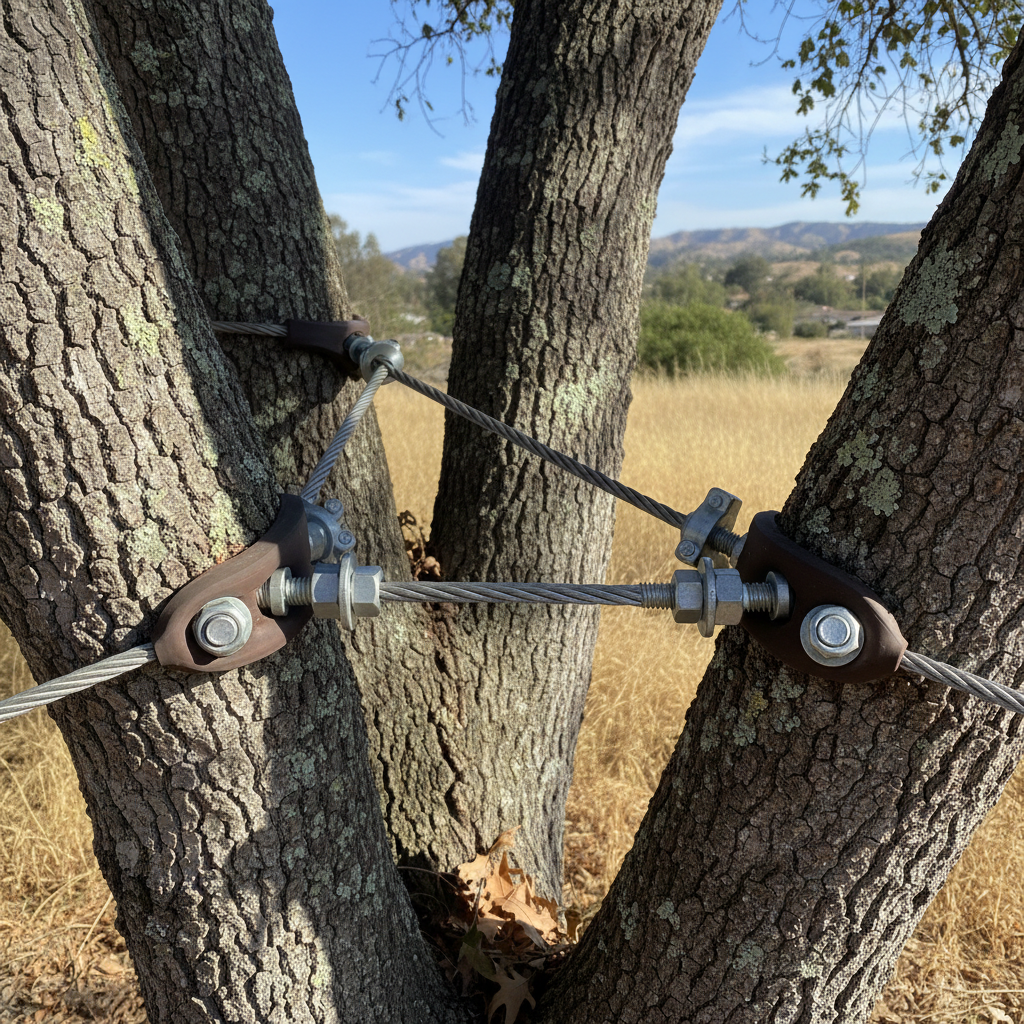
Ever look at one of your big trees and think, “Man, that branch looks like it’s about to split right off”? Or maybe you’ve got a tree with multiple trunks that just seems a little unstable? You’re probably looking at a candidate for tree cabling or bracing. It’s a common solution for trees that need a little extra support, especially here in National City where some of our older neighborhoods, like those around Paradise Hills, boast mature trees that have seen a lot of weather.
What Even Is Cabling and Bracing?
Alright, let’s break it down. Cabling and bracing are basically like giving your tree a structural support system. We’re talking about installing steel cables or rods to help strengthen weak limbs or trunks. The goal isn't to fix a tree that's already failing, but to prevent failure in a tree that's at risk.
Cabling: This usually involves putting high-strength steel cables between two branches or between a branch and the main trunk. It limits how far the branches can move apart, reducing stress on weak crotches or areas where the wood might be prone to splitting. Think of it like a guy wire for your tree.
Bracing: This is a bit more invasive. It uses steel rods drilled through weak unions or cracks to hold parts of the tree rigidly together. It’s for when a split has already started or a union is really compromised. We don't do this as often as cabling, but it has its place.
Do You Need It? Signs to Look For
You don't need to be an arborist to spot some red flags. Here’s what I tell folks to keep an eye out for:
- V-shaped crotches: If two major branches grow up forming a tight 'V' instead of a strong 'U' shape, that union is often weak. It's a prime spot for splitting, especially with our occasional strong winds coming off the bay.
- Cracks or splits: Obvious, right? If you see a crack starting at a branch union or running down a trunk, that tree needs attention ASAP.
- Heavy, overgrown limbs: Some branches just get too long and heavy for their own good. They might look like they're leaning precariously or have a lot of foliage at the very end, putting extra strain on the attachment point.
- Multi-stemmed trees: Trees with several main trunks coming from one spot can be beautiful, but they often have weak connections where those trunks meet.
- Decay or cavities: If a tree has internal decay, even if it looks okay on the outside, it might need support to prevent failure where the wood is compromised.
What You Can (and Can't) Do Yourself
Let's be real. This isn't a DIY project for most homeowners. You might be able to prune a small branch or plant a sapling, but cabling and bracing? That's a whole different ballgame.
What you CAN do:
- Inspect your trees regularly: Walk around your yard once a month. Look up, look down. Notice any changes. Early detection is key.
- Keep an eye on the weather: After a big storm, especially those Santa Ana winds that whip through here, check your trees for new damage or signs of stress.
- Call a pro for an assessment: If you're unsure, don't guess. Get an expert opinion.
What you absolutely CANNOT do yourself:
- Install cables or rods: This requires specialized equipment, knowledge of tree anatomy, and understanding of load distribution. You can seriously injure yourself or, worse, damage the tree beyond repair.
- Use hardware store straps or chains: I've seen it. People try to rig something up with whatever they have. These aren't designed for tree support and can girdle the tree, cause more damage, or fail catastrophically.
- Climb tall trees without proper gear: Ladders are for houses, not for reaching high into a tree for structural work. It’s dangerous.
- Diagnose complex tree issues: You might see a crack, but knowing if it's structural, superficial, or if the tree is even a good candidate for support takes years of experience.
When to Call National City Tree Service
Honestly, if you suspect your tree needs cabling or bracing, you should call a professional. It's not a small job, and getting it wrong can be disastrous. Here's why you need us:
- Safety: Working in trees, especially large ones, is inherently dangerous. We have the training, equipment, and insurance to do it safely.
- Expertise: We know tree species, growth patterns, and how to properly assess structural integrity. We can tell you if cabling is even the right solution or if another approach, like targeted pruning, would be better.
- Proper equipment: We use specific types of cables, bolts, and tools designed for long-term tree support. This isn't something you can pick up at Home Depot.
- Long-term health of your tree: Incorrectly installed systems can do more harm than good, leading to girdling, decay, or even accelerating failure. We want your tree to thrive, not just survive.
Don't wait until a branch comes down on your roof or fence. If you've got concerns about a tree on your property, give us a call at National City Tree Service. We'll come out, take a look, and give you an honest assessment of what your tree needs to stay strong and healthy for years to come.